i’m going to articulate this poorly because words aren’t my strong suit but
there’s no “other side” to the holocaust. there is no “other side” to genocide. it’s wrong, full stop. to argue for it even hypothetically is a monstrous thing to do.
the nazis need “humanising” only insofar as to maintain the understanding that people are capable of doing such evil, and to keep watch of ourselves to make sure something like the holocaust doesn’t happen again.
nobody needs to humanise the nazis to “understand their side of the story.” their side is void and wrong and worthless. current neonazis and holocaust deniers are the new breed of this evil and should be stamped out, not have their viewpoints and arguments and beliefs taught in schools as a valid system of beliefs.
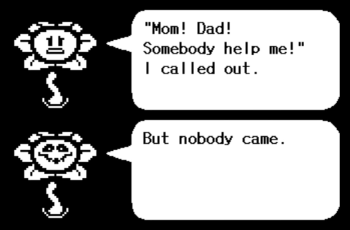
Idk if this is obvious? For Flowey, the whole “but nobody came” thing, where he wakes up in the garden and calls for help with no response, that’s a Really Big Thing for him, right? It doesn’t seem that terribly traumatic (at least not compared to everything else he’s been through), until you realize something:
It was the middle of the night when he woke up, in the pitch dark.
It becomes a lot more terrifying with the realization that he could see nothing and wouldn’t know where he was. The very last thing he’d be able to remember before just suddenly regaining consciousness, would be having been mortally wounded, stumbling into the garden, and dying.
Being unable to feel his limbs, he was initially immobile, and not being able to see anything but pure dark or hear anything but his own echoing voice, a reasonable assumption follows that he probably thought that he was trapped, presumably forever, in a featureless, voidy afterlife.
That kind of thought would be terrifying enough to traumatize a person on par with a violent death itself, especially if left alone with that thought for several hours. Flowey tells us:
“Eventually” was probably when morning finally came and Asgore woke up and went to check the garden.
(Even more fun: Depending on just how long Flowey was left alone in the dark with his thoughts, the idea probably crossed his mind that this isolated ‘afterlife’ might’ve been a punishment for what he did/didn’t do.)
This experience affected him greatly enough that he incorporates it into his traumatic “play” with Frisk, trying to put them in his former position of being alone and helpless:
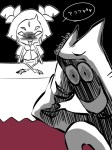
(full image on that middle part because I find it interesting that he makes a distorted goat face for that line)
And then, after Frisk calls for help, he says:
Further evidence:
Flowey leaves this echo flower message in runs where Toriel has been killed:
He describes this place-after-death as cold and dark.
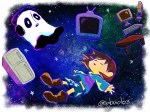
And finally, both of the times he gets the chance to “play” with Frisk, the hellscape he chooses for them?…












 honestly just really like undertale
